Overview
Evaluating disaster recovery (DR) strategies for a hybrid infrastructure environment by comparing three common approaches: replication-based recovery using Azure Site Recovery (Azure ASR), hypervisor level replication, and backup based recovery. The goal is to analyze tradeoffs between recovery time, data loss, cost, and operational complexity in order to determine which strategy is most appropriate for mid sized organizations.
Scenario
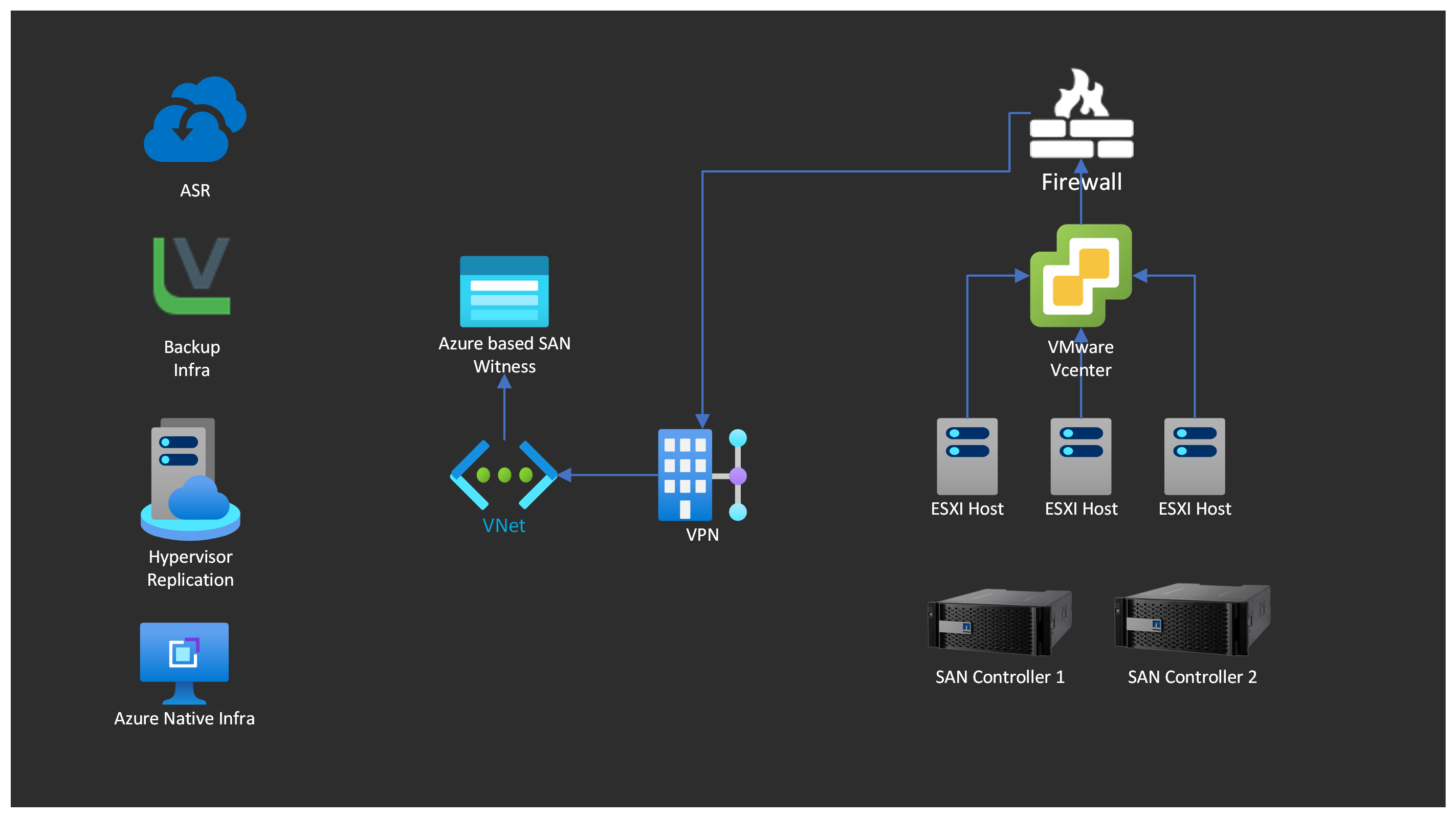
A regional credit union operates 12 branch locations connected to a central data center. The primary site hosts a VMware based environment consisting of three ESXi hosts backed by shared SAN storage. The SAN is configured with dual controllers and an Azure based witness to provide quorum for high availability and split-brain prevention. Critical workloads include core banking applications, authentication services, file services, and internal web applications.
The organization is looking for an option that can quickly restore critical banking workloads in the event of a primary site outage, ensuring continued operations across branch locations. Key considerations include minimizing downtime, maintaining cost efficiency, and avoiding unnecessary operational complexity in the event of failover.